
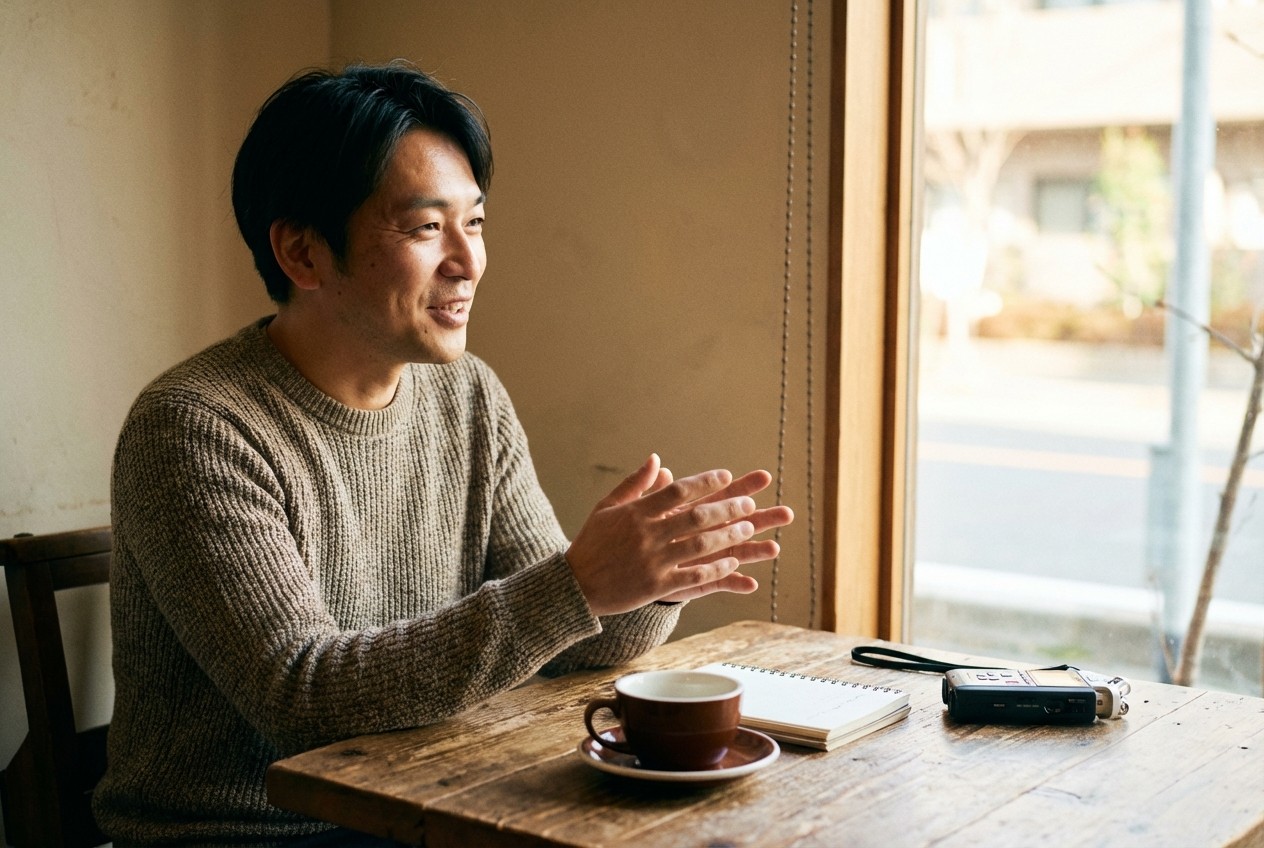
Interview vol.3
Yuichi Ishii Interview
Behind the Scenes
The art of performing "the real thing" on a stage without a script

Profile
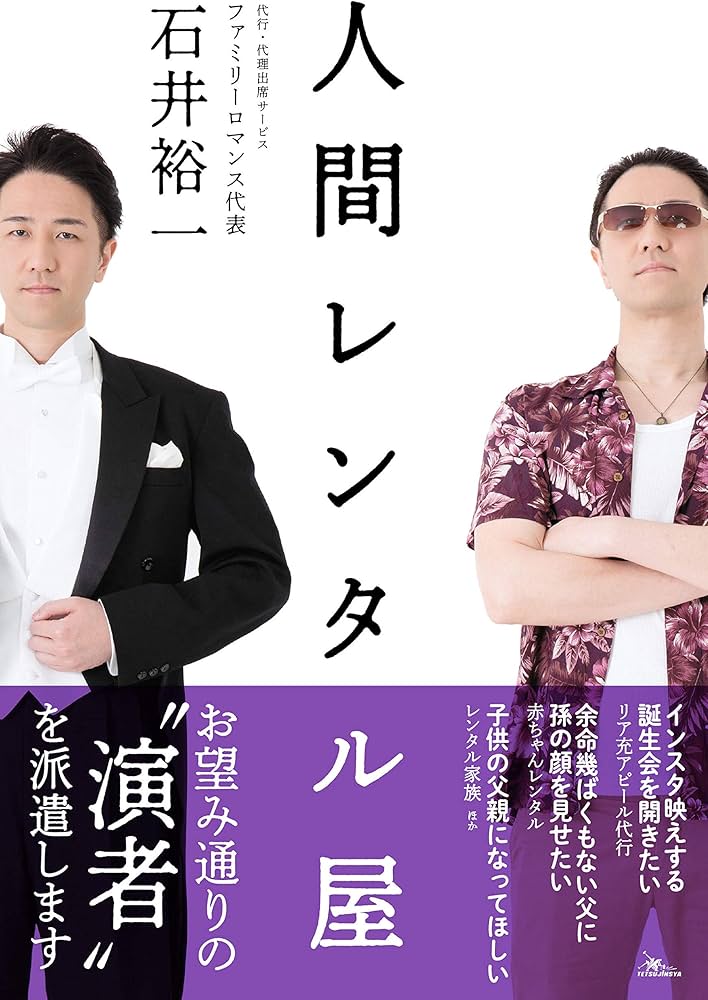
Yuichi Ishii
CEO, Family Romance Inc.
Born in Tokyo in 1981. A pioneer in the human rental industry who founded 'Family Romance,' a company offering family stand-in services and more. Guided by the corporate slogan 'Joy Beyond the Real,' he analyzes and communicates insights about modern society and the psychology of stand-in service clients every day.
Dialogue
How do your staff prepare for their roles?
Detailed Hearing of the "Ideal Person"
We conduct a detailed hearing with the client about their "ideal person."
By specifying these details, we can create a more "authentic" persona.
Not "Memorization" but "Understanding"
However, we don't just "memorize" the information. What matters is understanding the "essence" of the person and internalizing it.
For example, let's say the setting is a "kind father." But there are infinite ways to express "kindness."
A father who <strong>immediately rushes over and hugs</strong> his child when they fall
A father who says <strong>"Are you okay? Can you get up on your own?"</strong> when his child falls
Both are "kind," but expressed differently. Understanding which one the client wants -- that's what matters.
A Stage Without a Script
There is <strong>no script</strong> at a stand-in assignment. Unlike a movie shoot, you can't predict the other person's reactions, and unexpected questions may come at any time.
"Dad, what did you eat yesterday?"
"Dad, what's your favorite color?"
"Dad, do you love me?"
You must be able to answer sudden questions from children naturally. That's why instead of "memorizing" the setting, you need to "understand" it and <strong>be in a state where you can naturally behave as that person</strong>.
The Essence Herzog Saw Through
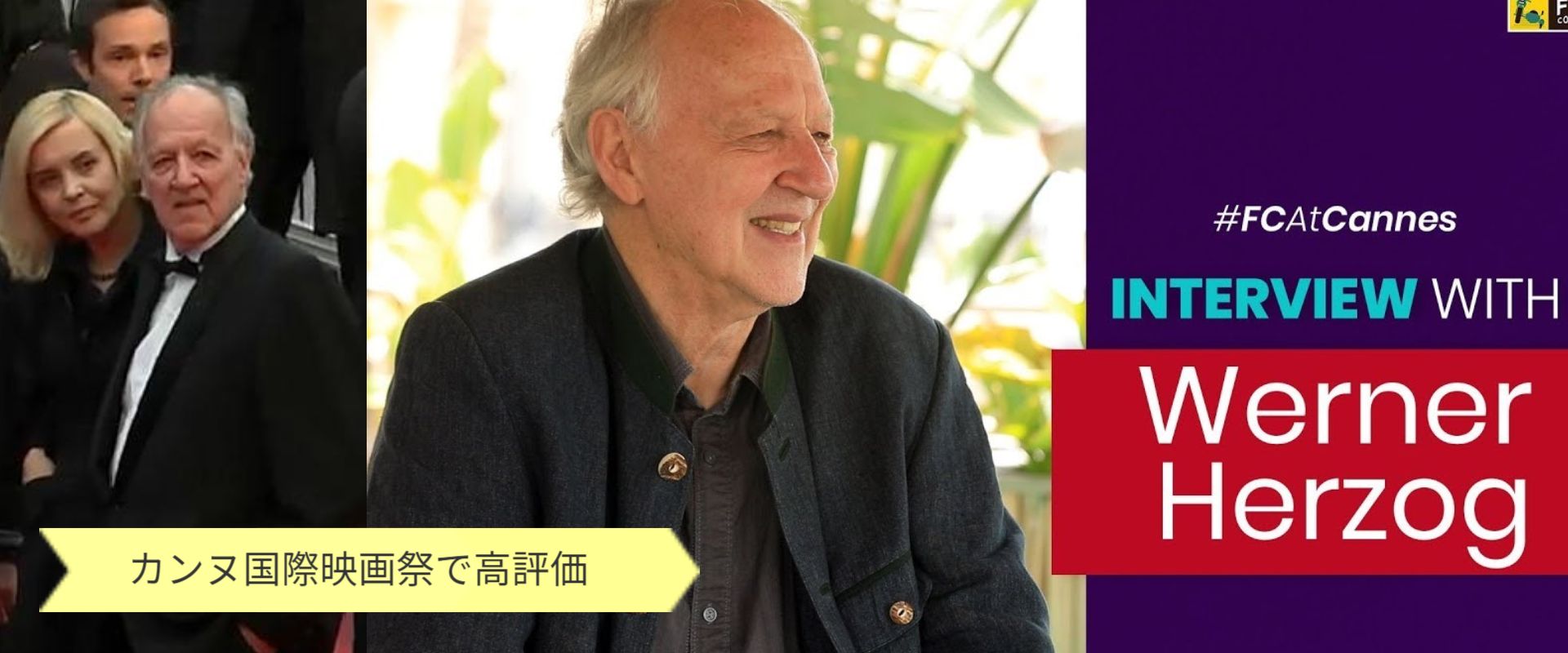
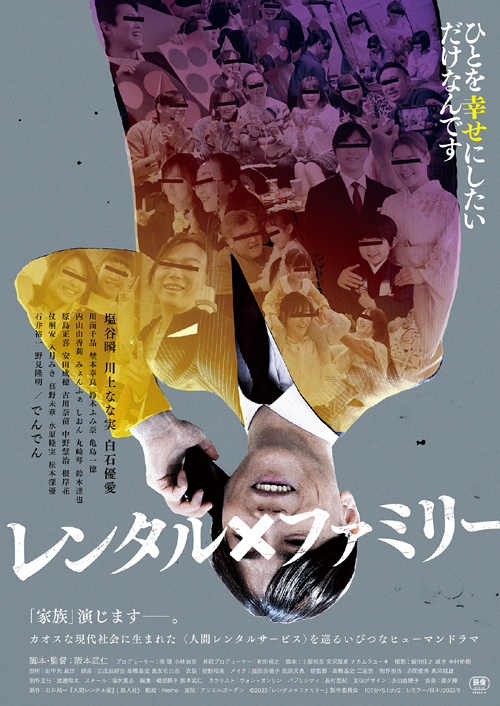
Interestingly, when Werner Herzog made a film about us, the director <strong>did not show the script to the actors</strong>.
He conveyed only the image for each scene and let the actors improvise based on their sensibilities -- that was exactly how our stand-in work operates. The director had seen through to the essence of the stand-in business.
"You guys are shooting a movie without a script every day. And on top of that, a movie where the other person doesn't know the script."
— Director Werner Herzog
For wedding proxy attendance, do you rehearse what to say beforehand?
Pre-meeting Is Essential
Yes, we always hold a pre-meeting. We confirm the relationship with the client (college friend, work colleague, etc.), how they met, shared memories, and "topics that must not be discussed."
【Example Setting: College Friend】
Not Everything Is Scripted
However, we don't script every conversation. That would look unnatural.
Experienced staff have the <strong>ability to read the room and blend in naturally</strong>.
"Where did you meet so-and-so?"
"What was so-and-so like back in the day?"
"What's your best memory with so-and-so?"
Being able to answer these questions naturally while staying within the established setting is crucial.
Speeches and Entertainment
We are sometimes asked to give speeches or provide entertainment at weddings, which requires even more thorough preparation. We practice multiple times to deeply understand the client's life story and deliver a heartfelt speech.
I personally have given speeches at weddings <strong>over 100 times</strong>. Each time, I deeply understand the life of one half of the couple, weave in personal anecdotes, and deliver heartfelt congratulations.
Do you handle long-term assignments as well as one-time requests?
Father Stand-ins Lasting Over 10 Years
Yes, we handle everything from one-time requests to assignments lasting years, sometimes <strong>over 10 years</strong>.
Speaking from my own experience, <strong>my longest father stand-in has continued for over 10 years</strong>. The daughter who was in 4th grade when we first met is now old enough to graduate high school. I've been present as her "father" at entrance ceremonies, sports days, parent visits, school festivals, and entrance exams.
Relationships That Change with Growth
In long-term assignments, the relationship changes as the child grows.
Elementary school years
Holding hands while walking, playing in the park together, hugging you and saying "I love you, Dad!" A time when they purely adore their father.
Middle school years
Puberty sets in and they start keeping some distance. "Dad, it's kind of embarrassing, so let's not hold hands" -- you can feel their growth in words like these.
High school years
Career counseling, relationship troubles -- conversations become deeper. As a father and as a fellow adult, you face these seriously together.
The child who held your hand as a little one will start keeping their distance during puberty. Playing the "father" includes that too.
The 5-Family Rule
However, <strong>each staff member is limited to husband/father stand-in roles for up to 5 families</strong>.
Beyond that, it becomes difficult to accurately remember each family's details.
For example, if you accidentally called a child by the wrong name at a sports day, everything would be ruined. To prevent such mistakes, we strictly enforce this rule.
Has anyone ever discovered the truth? Have there been any problems?
Zero Discoveries
Fortunately, <strong>there have been no reported cases of a stand-in being discovered</strong>. This is thanks to thorough training, comprehensive manuals, and the responsiveness of our experienced staff.
The Sports Day Golden Rule
For example, there is a <strong>golden rule when attending sports day as a father stand-in</strong>.
"When filming your child, never zoom in"
It's extremely difficult to spot a specific child among all the kids in matching gym clothes and caps, and there's a risk of filming the wrong child. By filming a wide shot, "your child" will be somewhere in the frame -- that's the strategy.
In fact, even real fathers often lose sight of their own child at sports days. So filming wide isn't unnatural at all.
Emergency Backup System
We also equip all staff with <strong>emergency communication devices</strong> in case of unexpected situations. If a problem arises, we can immediately activate our backup system. For example, if an unexpected relative appears, we contact headquarters immediately to discuss a response.
No Sense of "Lying"
Above all, we don't approach assignments with the mindset of "telling a lie." <strong>In that moment, in that place, we truly are "that person."</strong> That conviction is what makes natural behavior possible.
When I'm cheering at a sports day, I truly am "Dad." Wishing for the child's growth, worrying they might fall, being moved by their effort -- those emotions are not fake.
Is it difficult to end a role? Do you become emotionally attached to clients?
This is the <strong>deepest question</strong> we constantly face.
Emotional Attachment Is Unavoidable
Do we become emotionally attached? Honestly -- <strong>yes, we do</strong>.
Especially in assignments involving children, as you watch them grow and build trust, developing emotional bonds is unavoidable.
When the daughter I'd been involved with as a father for 10 years passed her high school entrance exam, I was genuinely happy. I nearly cried.
"I passed, Dad!"
The moment I heard those words, I felt the joy of a real father.
The Most-Proposed-to Man in Japan
I've been proposed to many times by the mothers of my clients -- "Please stay with us forever" or "Please become part of our real family."
<strong>I'm probably the man who has received the most proposals in Japan</strong>.
"Mr. Ishii, we're not strangers anymore, are we? Won't you become our real family?" -- When told that, how could I not be happy? It's proof that my work is valued. But at the same time, it comes with complex emotions.
Maintaining Boundaries
However, we maintain appropriate boundaries. Stand-in services are provided for compensation, within defined timeframes. If emotional bonds become too deep, the business becomes unsustainable.
I don't handle just one family -- I play different characters for different families. A gentle father for Family A, a strict father for Family B, a funny father for Family C -- I play the "ideal father" each family desires.
An Unavoidable Reality: Death of Staff
And there is an unavoidable reality. For parent stand-ins performed by elderly staff, a day will come when they too pass away.
When that happens, <strong>the client cannot attend the funeral</strong>. The staff member has a real family, and their real family serves as chief mourner. Even if a female staff member served as "Mom" for 10 years, the client cannot even say a final goodbye.
This is the saddest reality our service faces.
Looking Ahead to "The Day of Truth"
That is precisely why it's our responsibility to explain to clients who have become dependent on the service that "a day will come when you must tell the truth to those around you."
Especially when children are involved, we discuss with the mother the right timing to reveal the truth once the child has grown enough. When a child discovers that the person they believed was "Dad" is actually a stranger -- we take the utmost care to minimize the emotional damage.
Tell us about identity issues.
Is the "Current Me" Real?
Sometimes, when I'm watching a movie alone and laughing, a sudden fear grips me.
"Is the me laughing right now my real self? Or is it an act?"
-- A moment when the boundaries of identity become blurred.
Playing Different People Every Day
Monday: a gentle father for Family A. Tuesday: a stern businessman for Company B's apology assignment. Wednesday: a sweet romantic as a rental boyfriend for Ms. C. Thursday: a funny uncle for Family D --
When you play different people in different households every day, there are moments when <strong>you don't know which one is the "real you."</strong>
"Acting" Even in Private
Sometimes, while having dinner with friends, I suddenly notice something.
"Am I playing the role of 'Yuichi Ishii enjoying dinner with friends' right now?" Am I truly happy, or am I pretending to be happy? -- I can't tell where the boundary lies.
Why I Keep Going
This may be the <strong>greatest inner conflict</strong> of continuing this work. But I keep going because of the smiles on my clients' faces.
"Thanks to you, Mr. Ishii, my child started smiling again."
"Having you here, Mr. Ishii, truly saved me."
Those words are what keep me going.
The Human Essence Behind Stand-in Work
What emerges from this interview is that stand-in work is not mere "acting," but an extremely sophisticated profession requiring deep human understanding and empathy.
Improvising on a stage without a script, responding in real-time to the other person's reactions. Watching over a child's growth for over 10 years. Becoming emotionally attached while still maintaining boundaries.
And confronting the wavering of one's own identity while continuing to serve clients -- Yuichi Ishii's words convey the depth of this work and the inner struggles that accompany it.


Free Consultation & Quote
Consultations are completely free and strictly confidential.
For urgent inquiries, please call us at {phone}.0120-949-341